
Related: Brushless vs Brushed Motors: What Actually Changes on a Jobsite
I've bought drills with my own money and with a client's deposit for 22 years, and the thing nobody behind the counter will tell you is this: a cordless drill driver set is not a purchase, it's a marriage. The drill is the cheap part. The batteries, the charger, and the half-dozen tools you'll hang on that same platform over the next decade are where the real money goes. Buy into the wrong platform at 30 and you'll still be paying for it at 50.
There's a graveyard wall in my shop outside Cleveland. Thirty-some tools, and I can tell you how each one died. Melted brushes. A chuck that lost its grip in week two. A hammer drill that caught fire mid-pour on a basement job. Nothing goes on that wall without earning its death, and nothing earns a permanent spot in my truck without surviving a season of real deck work.
So when I look at a drill now, I'm not looking at the torque number printed on the box. I'm looking at the chuck, the motor, and the battery platform. Those three things decide whether you're still using the tool in five years or shopping again next spring. Here are four cordless drill drivers that cover the whole range, from a complete kit with a battery in the box to a renewed 12V you can hand a teenager.
Best Overall: DEWALT 20V MAX Cordless Drill Driver Set (DCD777D1)
If you want one box that covers most of what a homeowner or a working carpenter does in a week, this is the one. Brushless motor, 1/2-inch chuck, two speed ranges, and a 2.0 Ah battery and charger included, so the tool works the minute it comes out of the box. The LED light sounds like filler until you're drilling into a cabinet base at 4 p.m. in a basement with one bare bulb.
The 1/2-inch chuck is the part I care about most. Half-inch capacity means you can run a spade bit through a stud without reaching for a second tool, and it means the drill accepts the bits you already own. A 3/8-inch chuck is fine for driving and light drilling, but the moment you want to bore a 1-inch hole for a run of Romex, you're out of luck.
Brushless matters more than the spec sheet admits. Brushed motors shed carbon and lose efficiency as they heat up, which is exactly what happens at screw 50 of a deck build in July. No brushes means less to wear out and more runtime out of the same battery. The two speed ranges do the rest: low gear for driving and boring, high gear for pilot holes. This is the drill I'd point a first-time buyer toward if they want to buy once.
Best for DeWalt Owners Who Already Have Batteries: Brushless Drill Driver Compatible for DeWalt 20V
Here's the case for a bare tool. If you already own DeWalt 20V batteries and a charger, you don't need another one in a box. This drill runs on the DeWalt 20V platform you already have, which means your money goes into the tool instead of a second battery sitting in a drawer.
The specs line up the way a drill should: brushless motor, two speed ranges at 0-450 and 0-1,800 RPM, a 25+1 position clutch, and a 3/8-inch keyless chuck. The clutch is the underrated feature here. Twenty-five settings means you can drive a screw into drywall without burying it, then crank the collar up when you actually want to drill. Most people who strip screws are fighting a drill with too few clutch positions.
The trade-offs are honest ones. No battery, no charger, and a 3/8-inch chuck instead of a 1/2-inch. For assembly, cabinet work, and hanging things on walls, that's plenty of tool. For boring big holes, it isn't. Know which job you're buying for before you click.
Best Complete Kit for DIY: AVID POWER 20V Cordless Electric Drill Set
This is the one for the person who owns a corded drill from 2004 and a shoebox of mismatched bits. It's a complete 20V kit, so battery, charger, and drill arrive together, and the 3/8-inch keyless chuck takes the standard bits you'll find at any hardware store.
For furniture assembly, curtain rods, shelf brackets, and the occasional pilot hole, this class of drill does everything you need. The 3/8-inch chuck keeps the tool smaller and lighter than a half-inch model, which matters when you're holding it overhead on a ladder with one hand and trying to start a screw with the other.
What I'd tell a first-timer: set your clutch low, let the tool do the work, and stop leaning on it. Almost every stripped screw I've seen on a homeowner job came from pushing the drill instead of letting the clutch and the motor handle it. If you're building toward a battery platform you'll keep for a decade, treat this as a starting point rather than a destination.
Cheapest Way In: DEKO PRO 12V Cordless Drill Set (Renewed)
Twelve volts, a 3/8-inch keyless chuck, and a renewed unit that ships in a gift box. Let's be honest about what this is: a small, light drill for small, light jobs. Assembly, a picture frame, a loose cabinet hinge, a shelf that needs an anchor. It fits in a drawer and it won't wear out your wrist.
A 12V drill will not drive 3-inch deck screws all afternoon, and it isn't built to. Anyone who tells you otherwise has never built a deck. But for an apartment, a first tool, a dorm room, or the kitchen drawer drill that comes out twice a year, the size is the entire point.
The renewed label is the part to think about. Renewed tools are inspected and functional, but you're buying a used tool with a shorter life ahead of it than a new one. If the price gap is meaningful and the jobs are light, that's a fair trade. If you want a drill to grow into, put the money toward a 20V brushless kit instead.
How I sort drills like these
I don't care what the box says at screw five. I care what happens at screw 200.
Four things decide it for me. The chuck: does it hold a bit under load without slipping, and does it still hold after a few hundred bit changes? The motor: brushless or brushed, because that's the difference between a seasonal tool and a decade tool. The battery platform: can I still buy packs and parts in five years, and does that same pack run a saw, a light, and an impact driver? And the feel: trigger control, balance, and whether the tool is still comfortable after an hour of overhead work.
Two more things matter that never make the spec sheet. Weight, because a lighter drill gets used more often. And repairability, because a tool you can still get parts for is a tool you keep.
What actually separates these four
The DEWALT kit and the DeWalt-compatible bare tool live on the same 20V platform, and that's the whole story for anyone who already owns those batteries. One gives you a battery, a charger, and a 1/2-inch chuck. The other gives you the tool alone with a 3/8-inch chuck and a 25+1 clutch. Same family, different jobs.
The AVID POWER 20V set sits in the middle: a complete 20V kit with a 3/8-inch chuck aimed at the household list, where the goal is one box that handles everything from a wobbly chair to a new shelf. The DEKO PRO 12V is the smallest and lightest of the group, a renewed unit aimed at light repairs and small hands.
Chuck size is the line that divides them. Half-inch chucks take big bits and bore holes. Three-eighths chucks are lighter and fine for driving and drilling small holes. Be honest about your job list and the choice usually makes itself.
The cordless drill driver comparison table
| Drill | Battery | Chuck | Best for |
|---|---|---|---|
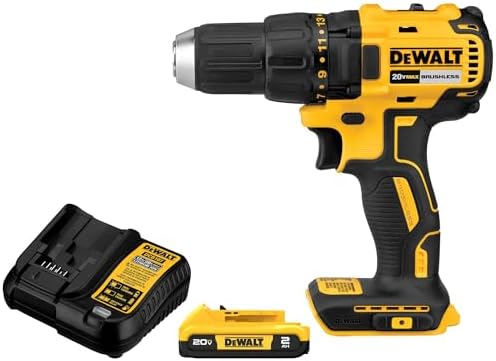 Visit on Amazon → Visit on Amazon →DEWALT 20V MAX DCD777D1 |
20V MAX, 2.0 Ah battery and charger included | 1/2 in keyless, 2 speed | The one kit that covers most jobs |
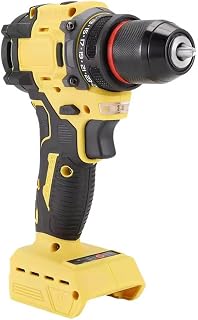 Visit on Amazon → Visit on Amazon →Brushless Drill Driver Compatible for DeWalt 20V |
Runs on DeWalt 20V packs you already own, none included | 3/8 in keyless, 25+1 clutch | DeWalt owners with batteries on the shelf |
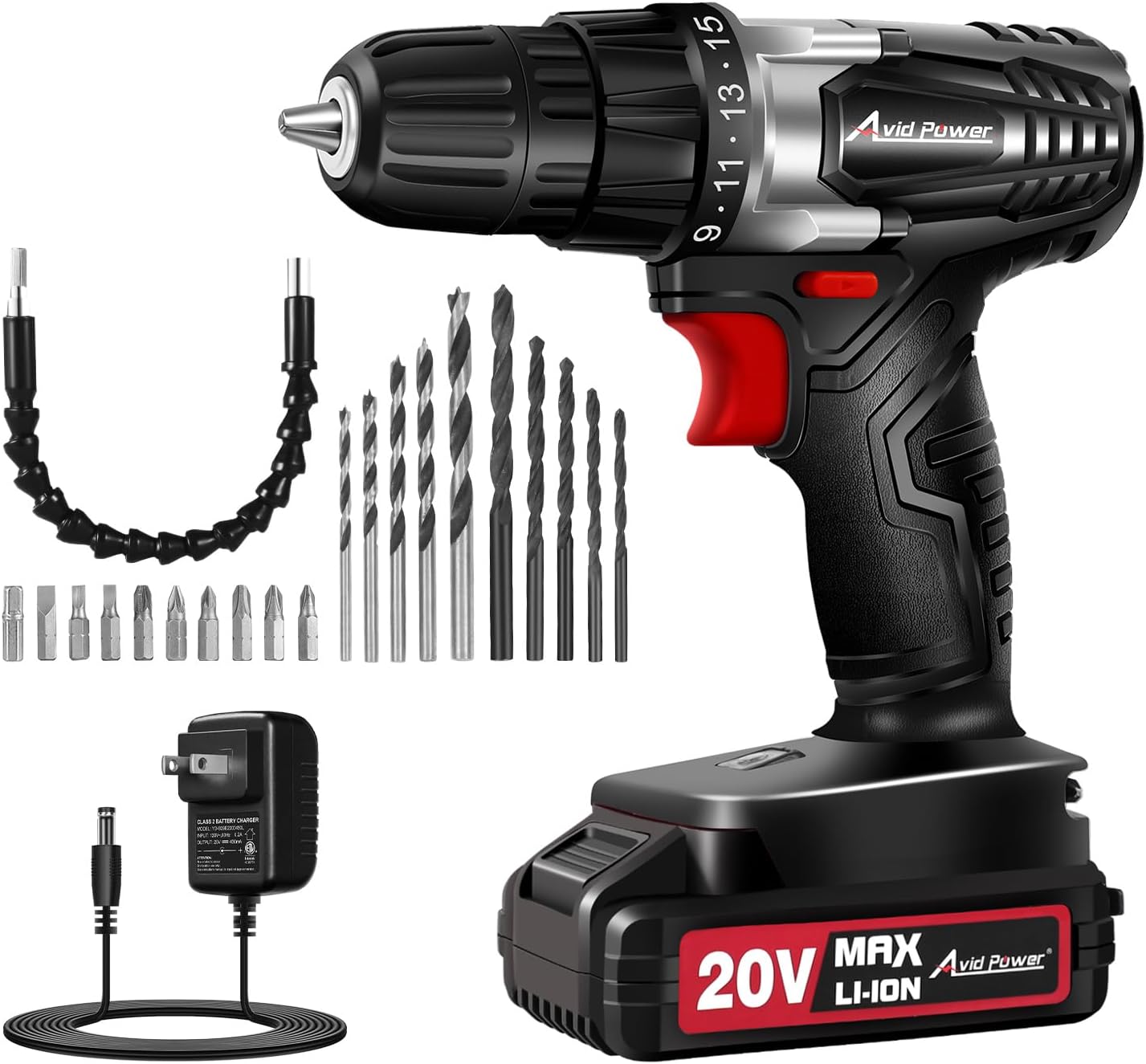 Visit on Amazon → Visit on Amazon →AVID POWER 20V Cordless Electric Drill Set |
20V kit with battery and charger | 3/8 in keyless | DIY and household assembly |
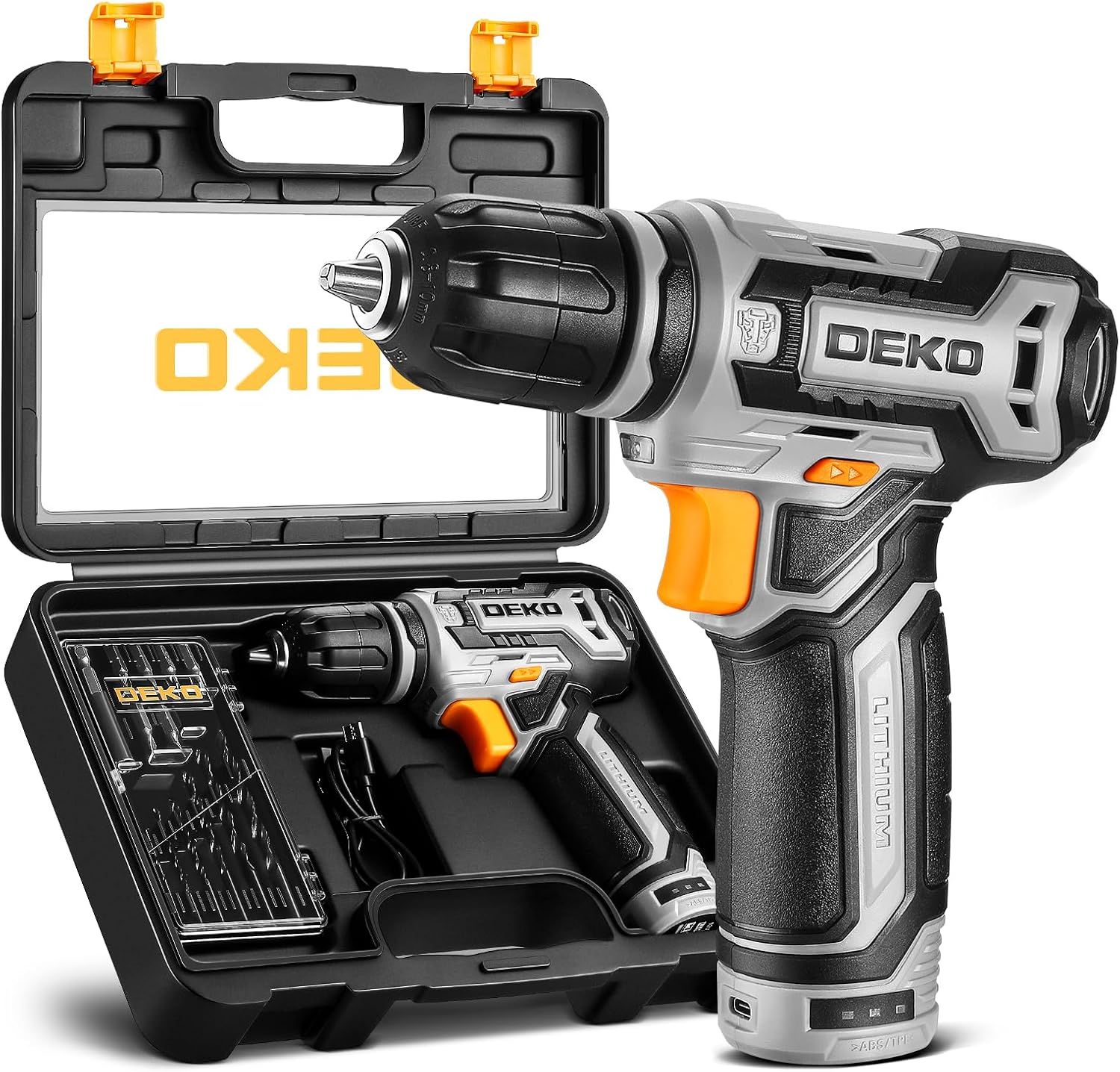 Visit on Amazon → Visit on Amazon →DEKO PRO 12V Cordless Drill Set (Renewed) |
12V, renewed unit in a gift box | 3/8 in keyless | Light repairs and small jobs |
The table tells you the same thing the sections do: pick by chuck and by platform, not by the torque number on the box.
Should you buy the DEWALT 20V MAX Cordless Drill Driver Set?
Yes, if you want one box that covers most of the work. It's brushless, it has the half-inch chuck that lets you bore real holes, and the battery and charger come with it so there's nothing else to buy. For a homeowner who wants to buy once, or a carpenter who wants a dependable second drill on the truck, this is the safe answer.
Should you buy the DeWalt-compatible bare-tool brushless drill?
Yes, if you already own DeWalt 20V batteries and a charger. You're skipping the pack you don't need and putting the money into the tool. Just accept the 3/8-inch chuck and the fact that it won't bore big holes. For assembly, cabinets, and home repair, it's the practical buy.
Should you buy the AVID POWER 20V Cordless Electric Drill Set?
Yes, for a first kit or a dedicated household drill. It arrives complete with battery and charger, the 3/8-inch keyless chuck takes standard bits, and it's light enough to use overhead. It's a starting point, not a lifetime platform.
Should you buy the DEKO PRO 12V Cordless Drill Set?
Yes, if your list is small and your storage is tight. It's the lightest way into owning a drill, and for hinges, frames, and flat-pack furniture it does the job. It's renewed, so treat it as a tool with a shorter runway. If you want something to keep for ten years, spend up to a 20V brushless kit instead.
Whichever one you pick, set the clutch before you start driving, keep the chuck clean, and let the motor do the work. That's most of what separates a drill that lasts a decade from one that ends up on somebody's graveyard wall.