Related: Best Cordless Drill for Deck Building: Torque That Lasts Past Screw 200
Twenty-two years of running a contracting crew out of Cleveland taught me that a cordless drill is never the whole purchase. The battery platform is. You are not buying a drill, you are marrying into a family of tools that will follow you for the next decade, and the drill is just the first thing you hang on it. Most people make that decision by accident, standing in an aisle, looking at a torque number.
The other half is power, and it is the half nobody talks about. Plenty of the jobs I have run in the last five years had no outlet within three hundred feet, which means the chargers, the lights, and the radio all live or die on a portable generator. So this cordless drill and portable generator guide treats them as one decision, because on a real jobsite they are one decision.
Every tool that dies on my jobsites ends up on the graveyard wall in my shop. There are 30-some tools up there now: screwguns with melted brushes, a hammer drill that caught fire mid-pour, an impact driver that stripped its own anvil. The wall started as a joke and turned into the most honest review system I know, because nothing gets on it without earning its death. Spec sheets do not survive contact with a jobsite. Neither do most of the tools I look at.
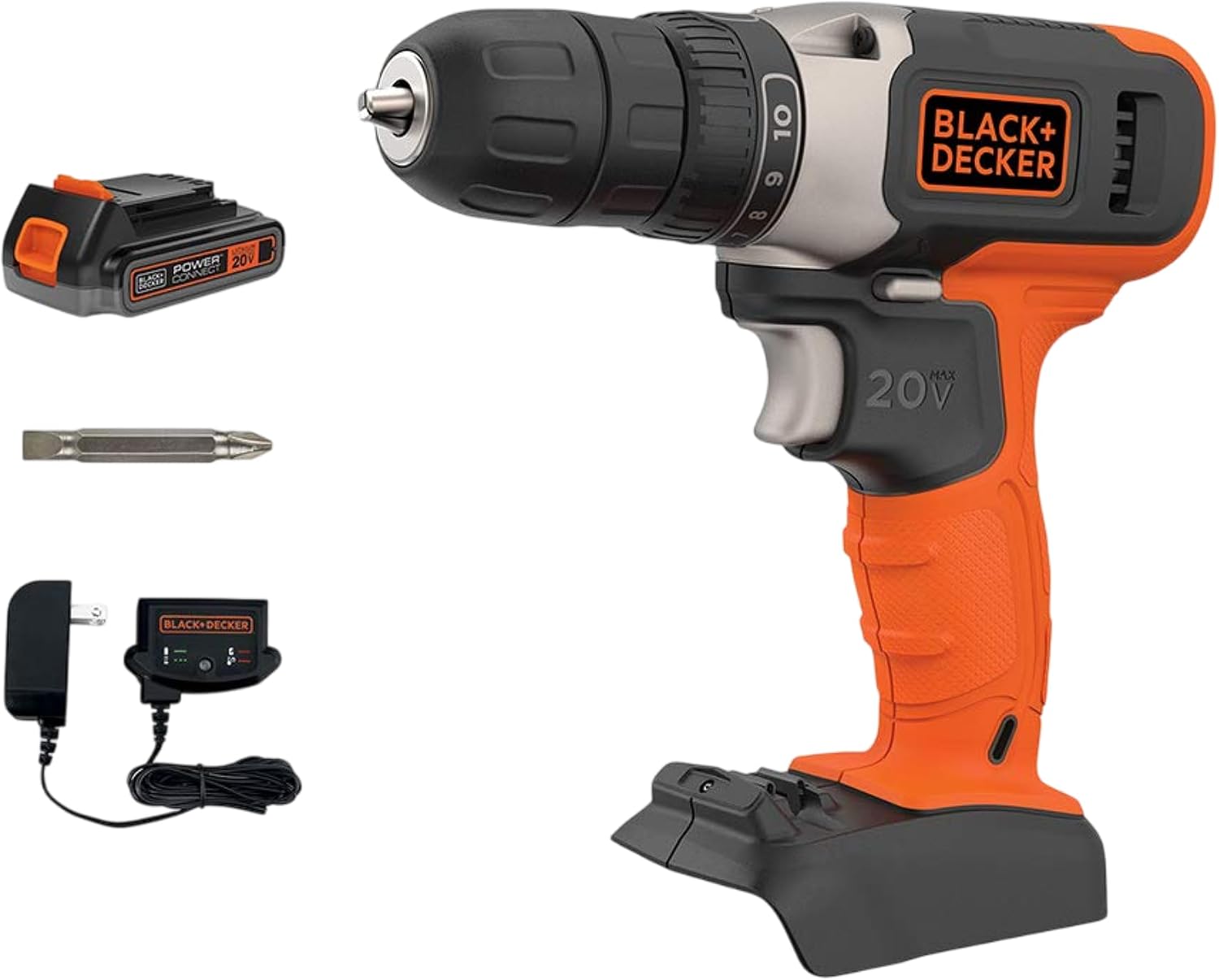
Best Overall Drill: BLACK+DECKER 20V MAX Cordless Drill Kit
For the homeowner who wants one drill to cover the whole punch list, this is where I point people. It is a 20V MAX cordless drill kit, so the battery, the charger, and a double sided drill bit all arrive in the same box and you are drilling the same afternoon. No hunting for a charger that fits a battery you already own.
20V MAX is the sweet spot for a homeowner platform. It is enough voltage to drive screws into framing lumber and set cabinet hardware without the tool bogging down, and it is a platform with a deep bench of other tools behind it, so the batteries you buy today still have a job in five years. That matters more than any torque number printed on the box.
What I look at first on a drill in this class is the clutch. The clutch is the collar that stops the chuck from spinning at a set torque so you do not bury a screw straight through drywall. If you are hanging cabinets or assembling furniture, you will touch the clutch more than the trigger. Set it low, let the tool do the work, and you stop stripping screws this weekend.
Where it gives up: this is not a deck-building drill. If your Saturday involves 200 three-inch deck screws, you want an impact driver with a quick-release collet, not a drill, and you want a bigger platform than this.
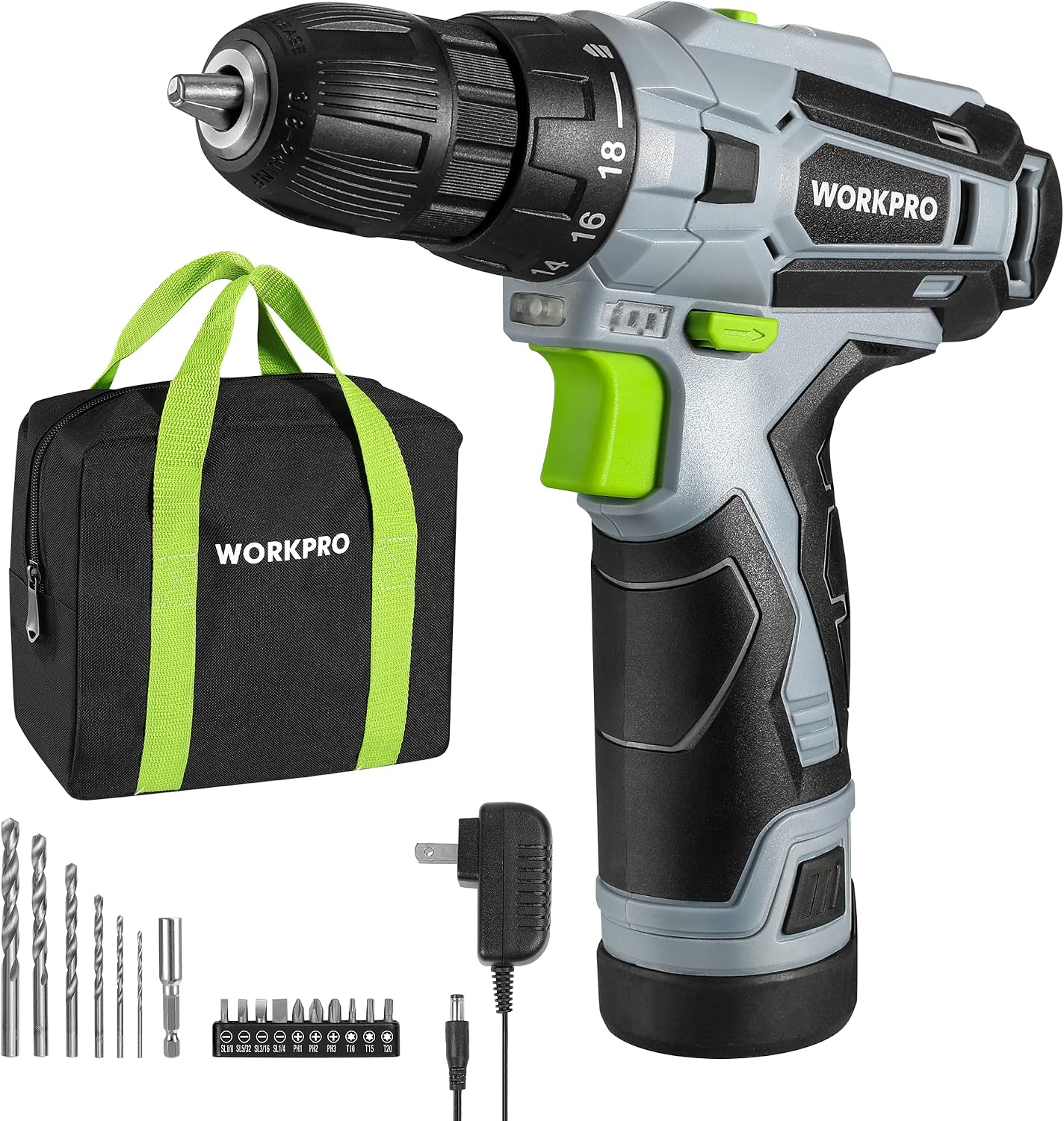
Best Budget Drill: WORKPRO 12V Cordless Drill Driver Kit
This is the one I would put in an apartment, a kitchen drawer, or the back of a car for a first-time owner. It is a 12V drill driver kit with a 3/8-inch keyless chuck, a charger, and a storage bag, and the bag matters more than people think. A drill that lives in a bag with its charger is a drill that still has a battery in it when you need it.
The keyless chuck is the feature to care about here. No chuck key to lose, no hunting through a drawer for a bent piece of steel. You twist the collar, the jaws open, you drop the bit in, and you are working. On a 12V tool that is the difference between grabbing it and avoiding it.
Be honest about the class, though. Twelve volts is light duty. It will drill pilot holes in softwood, set cabinet hinges, assemble a flat-pack desk, and hang curtain rods all day long. It will not drive three-inch deck screws into wet lumber, and it will not enjoy a half-inch spade bit. If that is your weekend, buy the 20V kit above and skip the frustration.
The other thing a 12V kit buys you is size. Small drills fit between studs, inside cabinets, and behind appliances, which is where a lot of real work happens.
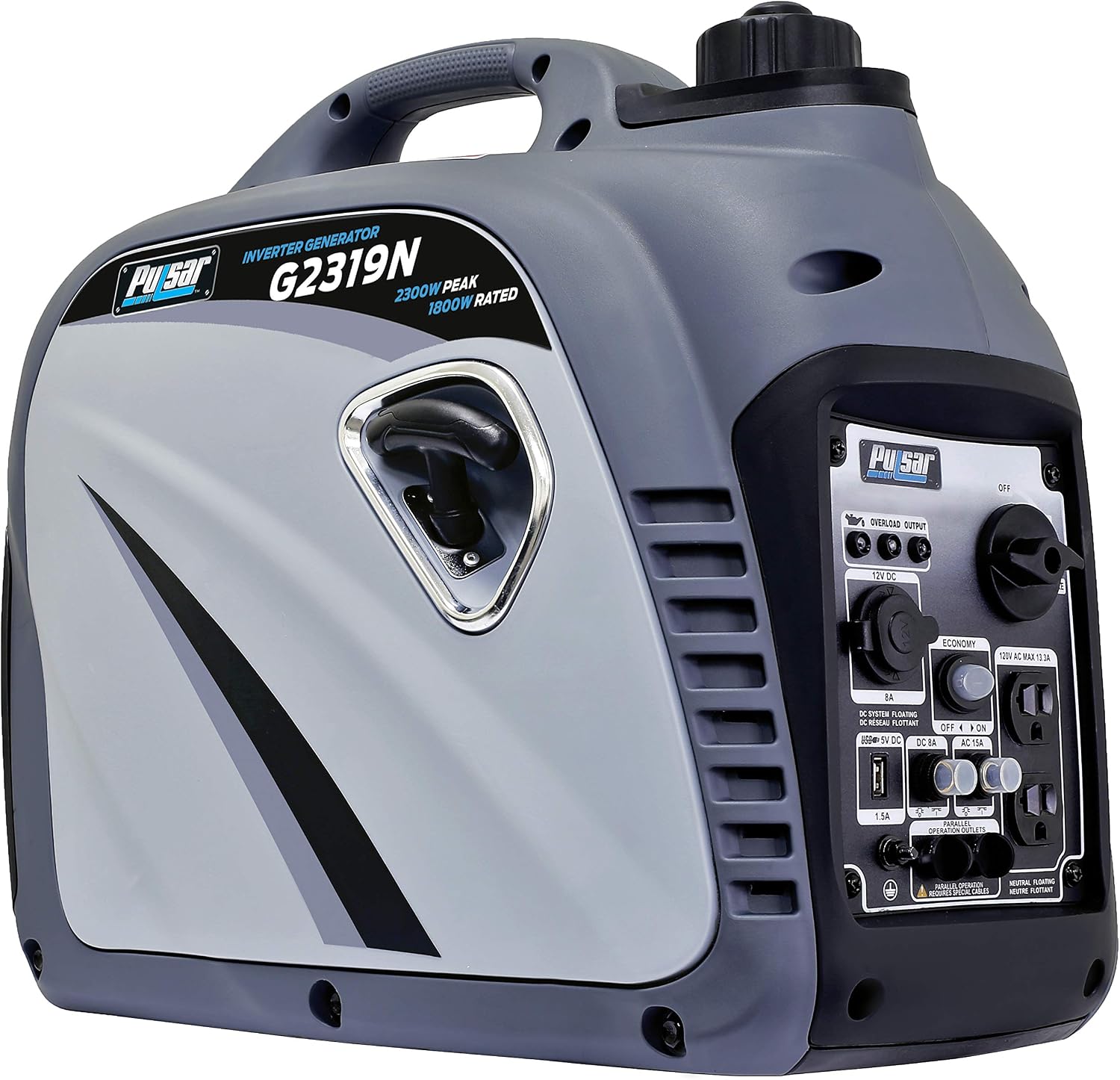
Best Jobsite Generator: Pulsar 2,300W Quiet Inverter Generator
This is the generator I would pair with the drills above. It is a 2,300W portable gas-powered quiet inverter generator with a USB outlet and parallel capability, and it is CARB compliant.
The word inverter is the one that matters. An inverter generator produces clean, stable power, which is what battery chargers, laptops, phones, and anything with a circuit board in it wants to see. On a remote site, the generator is not just running lights. It is running the chargers that keep your cordless platform alive, and that is a job an inverter does well.
Parallel capability is the growth path. Two of these, paired with the right cable, give you more capacity than either one alone, so you are not throwing away the first unit the day your load grows. That is the same logic as a battery platform: buy into something that can scale instead of something you outgrow.
CARB compliance is not a marketing line. If you live in California, it is the difference between a legal purchase and a returned one, so check that before you check anything else.
The USB outlet means one less wall brick in your bag. Small thing. On a day when three people are fighting over outlets, it is not a small thing.
Best Value Generator: 2550-Watt Portable Inverter Generator
If runtime is what keeps you up at night, this is the one to look at. It is a 2,550W portable inverter generator with a 1.06 gallon fuel tank rated for up to 10 hours of use, 120V output, and EPA compliance. It is in the same quiet inverter class as the Pulsar above.
Runtime is the headline. A 1.06 gallon tank and a 10 hour rating is the number that decides whether you fill up once in the morning or twice before lunch, and on a long day that is the difference between a tool and a chore.
Read that rating the way it was written. Manufacturer runtime figures are measured at part load, so if you are pulling hard, expect to burn through the tank faster. Plan your day around the light-load number and you will never be surprised.
2,550W is a modest step up from 2,300W, and neither of these is going to run a house. What they will do is keep chargers, lights, a radio, and small tools running all day without dragging an open-frame contractor generator onto a residential street at seven in the morning. Inverter generators are the quiet class, and that matters when the neighbors are home.
EPA compliance rather than CARB is the detail to note if you are in California. Check your state's rules before ordering either unit.
How I evaluate this gear
I do not review tools off a spec sheet, and I do not review them in an office. If I have not dropped it, I have not tested it, and that goes for generators as much as drills.
On a drill, the questions are always the same. What does it feel like at screw 50, not screw 5? Can I still buy batteries and parts for it in five years? Does the chuck still bite after 200 bit changes, or has it started slipping on brand-new bits? Would I hand it to my apprentice on a Monday morning and expect it back in one piece? A chuck that slips is a tool that lies, and I do not care how many inch-pounds the box claims.
Torque specs are measured on a fresh battery with a warm motor. Real torque is what is left after 50 screws, a tired arm, and a 40 degree Cleveland morning. That gap is where cheap tools die and where the honest ones earn their spot on the truck.
On a generator, I look at three things. Whether the power is clean enough for chargers and electronics, which is why inverter units win for this job. Whether the runtime rating holds up under a real load instead of a lab load. And whether the thing is quiet enough that I am not apologizing to a homeowner every time I start it.
I keep a 20-year-old corded drill in the shop for the jobs batteries cannot handle, so I am not going to pretend cordless solves everything. But for the work most people actually do, a drill and a generator cover it.
What the specs actually tell you
Two drills and two generators, and the specs sort them cleanly.
The 20V MAX kit is the general purpose pick. Higher voltage than the 12V WORKPRO, a full platform behind it, and a kit that arrives ready to work. The 12V WORKPRO is the light duty pick. Smaller, cheaper to get into, and perfectly capable inside its lane.
The gap between them is not quality. It is scope. Buy the 12V for assembly and small repairs and you will be happy. Buy it for a deck and you will be shopping again by Sunday.
The two generators follow the same pattern. The Pulsar 2,300W brings parallel capability, which is a growth path, and CARB compliance, which is a legal requirement in one large state. The 2550W brings a 1.06 gallon tank rated up to 10 hours, which is a runtime argument. Pick based on whether you would rather expand later or run longer today.
Wattage is where people get hurt. Running watts and starting watts are different numbers, and anything with a motor in it pulls a surge on startup. That is why the honest way to size a generator is to add up what you will run at once and then leave yourself room, not to buy the smallest unit that matches a single tool's label.
Cordless drill and generator reference table
| Product | Best for | Spec sheet highlights | Price |
|---|---|---|---|
 Visit on Amazon → BLACK+DECKER 20V MAX Cordless Drill Kit |
Homeowners, light remodel, cabinets and hardware | 20V MAX kit, battery, charger, double sided drill bit | $58.99 |
 Visit on Amazon → WORKPRO 12V Cordless Drill Driver Kit |
Assembly, tight spaces, first drill | 12V, 3/8 inch keyless chuck, charger and storage bag | $37.98 |
 Visit on Amazon → Pulsar 2,300W Quiet Inverter Generator |
Remote jobsites, charger power, expandable setup | 2,300W inverter, USB outlet, parallel capability, CARB compliant | $399.00 |
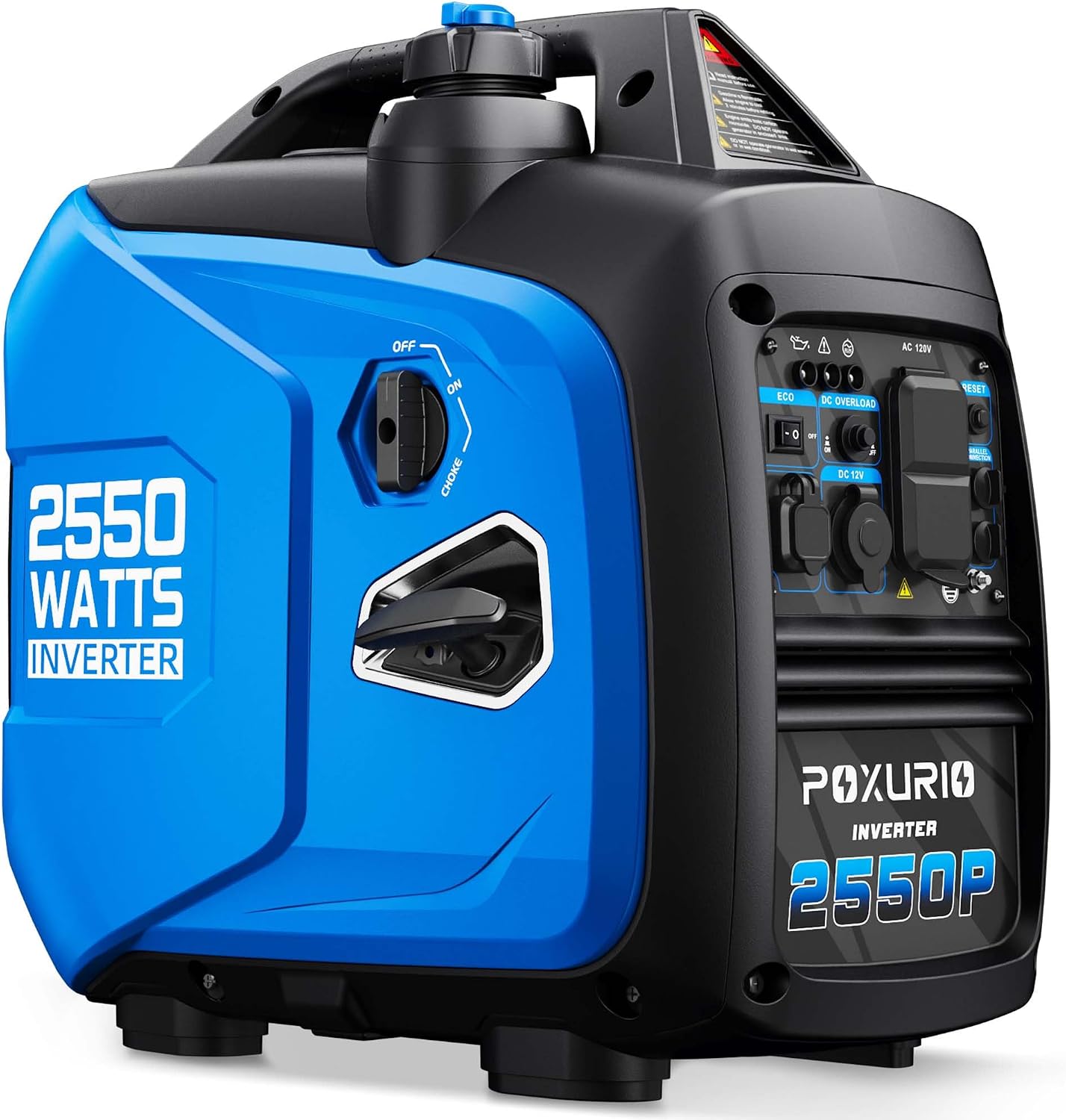 Visit on Amazon → 2550-Watt Portable Inverter Generator |
Long runtime, camp and remote sites, quiet neighborhoods | 2,550W inverter, 1.06 gallon tank, up to 10 hours, 120V, EPA compliant | $315.99 |
A note on buying the pair
If you are buying one drill and one generator in the same season, decide the drill first. The battery platform is the ten year commitment and the generator is the accessory that keeps it fed. Get the platform right, then buy the quietest inverter your budget allows and size it to the chargers plus the lights plus whatever else you plan to run at once.
Should you buy the BLACK+DECKER 20V MAX cordless drill kit?
Yes, if you are a homeowner or a light remodeler who wants one box that covers the punch list. The battery, charger, and a double sided drill bit are in the kit, the 20V MAX platform has room to grow, and it will handle cabinets, hardware, and pilot holes without drama. Set the clutch low and it will not strip screws on you.
No, if you are framing a deck. That is impact driver work on a bigger platform, and no drill in this class is going to enjoy it.
Should you buy the WORKPRO 12V cordless drill driver kit?
Yes, if you want a small, honest drill for assembly and repairs, and you want the charger and storage bag to come with it. The 3/8-inch keyless chuck means fast bit changes, and the compact body gets into places a full-size drill will not.
No, if this is going to be your only drill and you also do real carpentry. Twelve volts is light duty, and pretending otherwise is how people end up with a stripped screw and a bad mood.
Should you buy the Pulsar 2,300W quiet inverter generator?
Yes, if you want clean inverter power for chargers and electronics, a USB outlet on the panel, and the option to pair a second unit when your load grows. Parallel capability means this is a starting point, not a dead end. Buy it knowing the CARB compliance covers you in California.
No, if you need to run big motor loads today. This is a quiet jobsite and camping class unit, not a whole-home backup.
Should you buy the 2550-Watt portable inverter generator?
Yes, if runtime is your problem. A 1.06 gallon tank rated up to 10 hours means fewer fill-ups, and 120V inverter output keeps chargers and small electronics happy. It is EPA compliant, so check your state rules first if you are outside the usual markets.
No, if you want the expansion path. There is no parallel story here, so if you expect to grow, look at the Pulsar instead.