I have 30-some dead tools screwed to the graveyard wall in my shop, and every one of them teaches the same lesson: you do not buy a drill, you buy a battery platform, and you do not buy a power station until you know exactly what you plan to plug into it. This comparison of cordless tools and portable power stations exists because those two purchases decide whether a job keeps moving on a 40-degree Cleveland morning. The drivers do the work, the batteries feed the drivers, and the power station is what keeps the batteries alive when there is no outlet within 200 feet of the deck you're framing.
The short answer: if you already own DEWALT 20V MAX batteries, the XR impact driver is the best money in this group. If you own no cordless tools at all, the brushless combo kit gets you working for the least cash. If you need power away from an outlet, the 600W LiFePO4 station is the one I'd want on the truck, and the 300W unit with the folding panel is the one I'd throw in the car for a weekend.
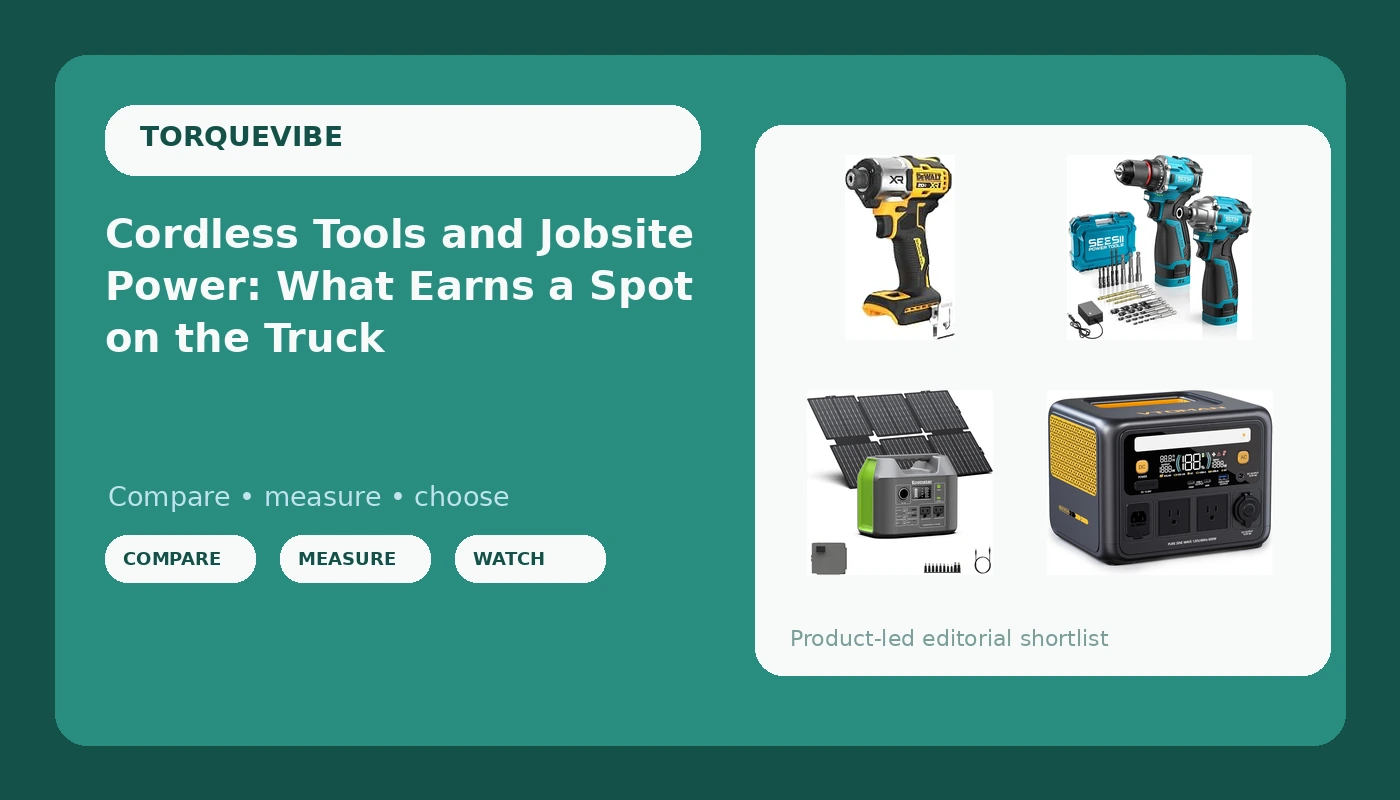
DEWALT 20V MAX XR Impact Driver (DCF845B)
Three speeds, brushless motor, 1/4 inch quick-release collet, and a platform you can still buy batteries for in ten years
Tool only. No battery, no charger, so the real cost depends entirely on what's already in your truck
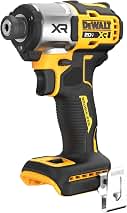
Cordless Drill Impact Driver Brushless Combo Kit for Home DIY
Two tools in one purchase, brushless motors, and the lowest entry cost if you're starting from nothing
DIY-grade platform. Parts and battery availability five years out is the open question
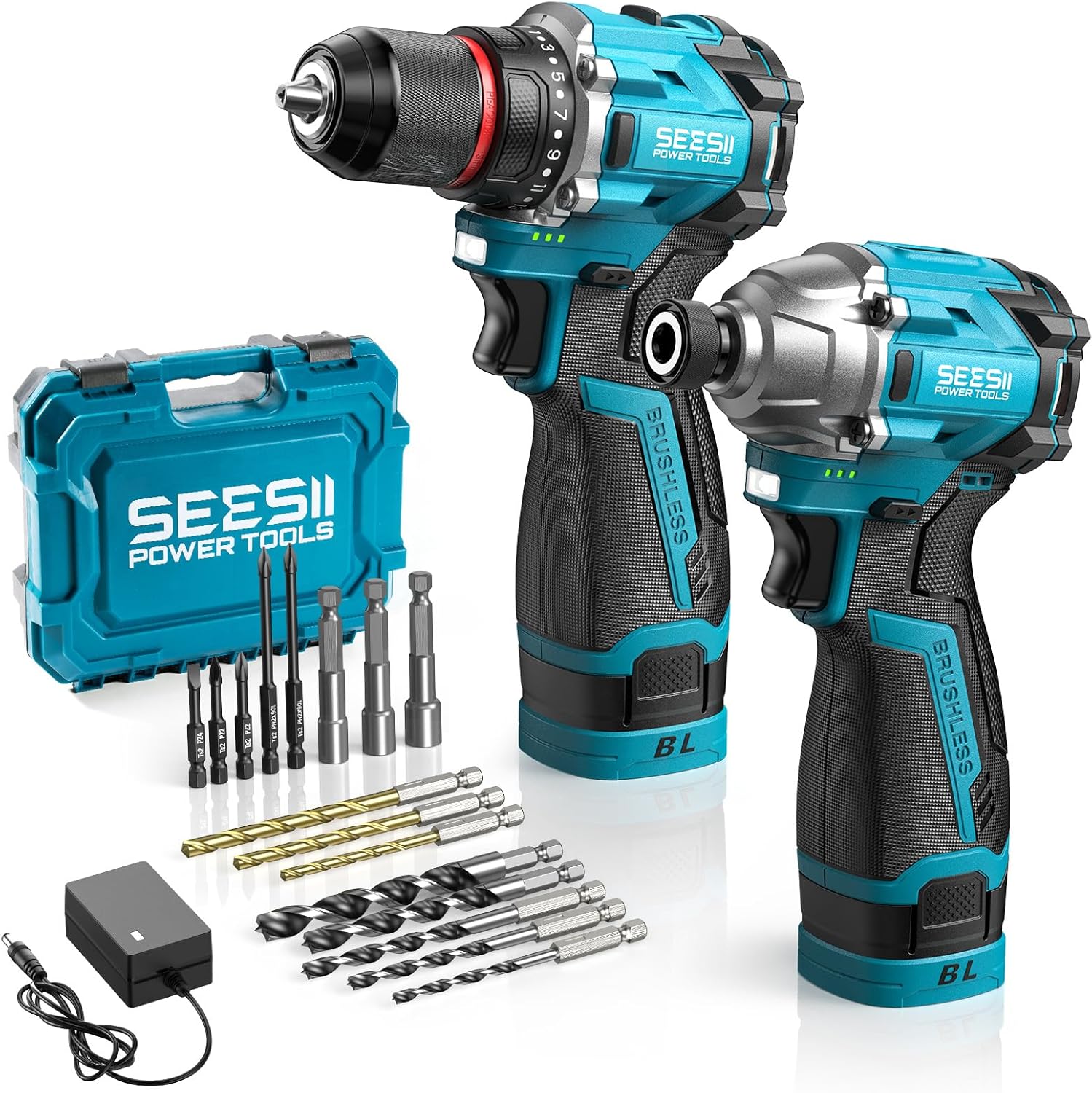
Portable Solar Generator 300W Power Station with 60W Foldable Solar Panel
The only option here with a panel in the box, and the lightest way to keep batteries topped off off-grid
300W is a ceiling for small loads, not a jobsite power plant
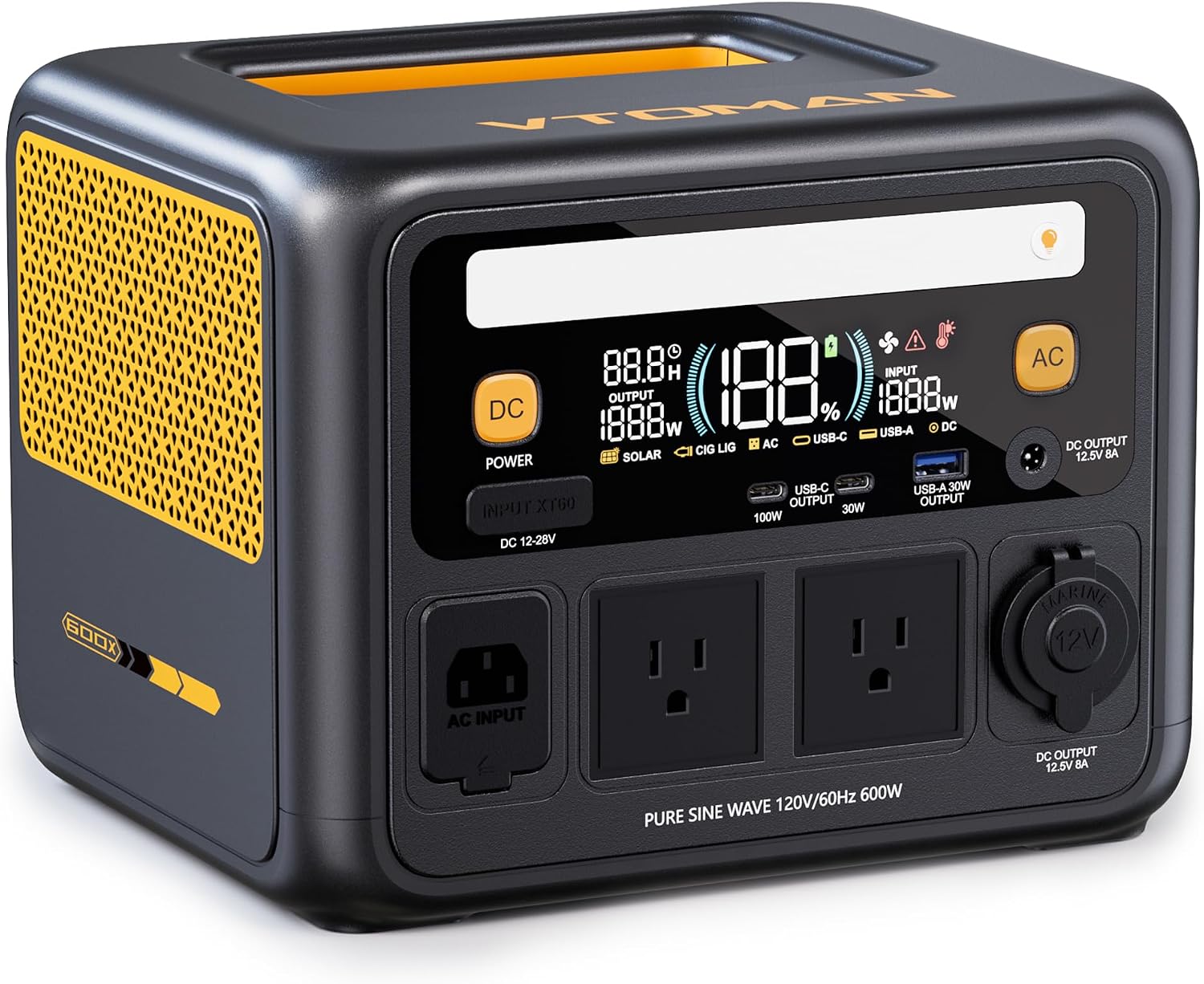
VTOMAN Jump 600X 600W Portable Power Station, 268.8Wh LiFePO4 Battery
600W of output, 268.8Wh of capacity, and LiFePO4 chemistry that holds up to repeated cycling
No solar panel included, and 600W still won't start a worm-drive saw
Prices and availability were captured from Amazon Creators API and may change.
Why these four end up in the same conversation
On paper this looks like a mismatched group: an impact driver, a combo kit, and two power stations. On a jobsite it isn't mismatched at all. Every cordless tool you own is a promise made to a battery, and every battery is a promise made to a charger. If the charger is 300 feet away in a basement with one live outlet, your productivity depends on a power station, not on how many inch-pounds the box claims.
So the way I compare these is in three passes. First, the driver: does it hold a bit, does it drive a 3-inch screw without drama, and does the motor have brushes to wear out. Second, the platform: can I still buy a battery for this thing in five years, and does the same battery run a saw, a light, and a vacuum. Third, the power: what does the box actually run, not what the marketing photo shows.
The impact driver that anchors the whole setup
The DEWALT 20V MAX XR Impact Driver (DCF845B) is the tool in this group I'd hand to an apprentice on a Monday morning without a second thought, and the reasons are boring ones. It's brushless, so there are no carbon brushes to smoke out on a long run of deck screws. It has three speeds, which matters more than most people realize: speed one for cabinet hinges and trim, speed three for driving 3-inch structural screws all afternoon. And it has a 1/4 inch quick-release collet instead of a chuck, which is the correct design for an impact driver and the one thing I will not compromise on. If you have ever fought a three-jaw chuck through 200 bit changes, you know why.
The catch is in the model name. Tool only. No battery, no charger, no bag. If you're already invested in the 20V MAX platform, that is exactly what you want, because you're paying for the tool and nothing else. If you're not invested yet, do the math on two batteries and a charger before you decide this is the cheap option, because it isn't. That said, the platform itself is the argument. Ten years from now you'll still be able to buy a battery for it, and that is worth more than a few dollars off the sticker.
The combo kit for the person who owns nothing
The Cordless Drill Impact Driver Brushless Combo Kit for Home DIY is aimed at a different buyer, and I'll say out loud that it's a legitimate one. If your tool collection is a hammer, a tape measure, and a screwdriver that lives in a kitchen drawer, you do not need a premium driver. You need a drill for pilot holes and an impact driver for the screws, both brushless, both working on day one. A combo kit solves that in a single purchase, and buying the drill and driver together almost always costs less than buying them separately.
What you give up is pedigree. This is a home DIY kit, not a platform a crew builds a business on. The two questions I'd ask before committing are the ones I ask about every budget tool: can I buy replacement batteries in five years, and does the drill's chuck still bite after 200 bit changes? Brushless motors are the right call at this price, because the brushed motors in cheap kits are the ones that smoke out. But if you're planning to frame a garage, run a deck, or hang cabinets for money, spend the extra on a platform you can grow into. The kit is a starting point, not a career.
Portable power: 300W versus 600W is the whole story
Here is where most people get burned, because watts on a box are continuous output, not surge, and tools lie about what they need. A charger, a work light, a laptop, a phone, a small fan: all of that lives comfortably inside 300W. A circular saw does not, and neither does a shop vac. If your plan is "run a saw off a battery box," no station in this comparison is your answer. If your plan is "keep four tool batteries charged all day on a site with no power," then this is exactly the right category and both of these work.
The Portable Solar Generator 300W Power Station with 60W Foldable Solar Panel is the one I'd describe as a truck-bed companion. The bundled panel is the whole point: 60W folded up is a trickle, and in October in Ohio a trickle is what you get, but a trickle over a full workday is real charge in a battery. Set it in the sun, run your chargers off the station, and the panel pushes back against the drain. It is portable, it is simple, and the panel means you're not hunting for an outlet to refill it.
The VTOMAN Jump 600X doubles the output ceiling at 600W and runs a 268.8Wh LiFePO4 battery. That chemistry is the reason I'd pick it for the truck: LiFePO4 holds up to repeated charge and discharge cycles far better than the older lithium chemistries, which matters when you're cycling it every single workday instead of twice a summer. 268.8Wh is a modest amount of capacity, so think of it as a day's worth of charging rather than a week's worth of running, and remember that 600W continuous still won't start a big saw. No panel in the box, so plan to charge it from the wall or buy the panel separately.
The trade-offs nobody puts on the box
Tool only is not cheaper, it's just smaller. The DEWALT driver's sticker looks great until you price batteries and a charger. If you're on the platform, it's the best deal in this article. If you're not, add the kit cost in your head before you compare.
Combo kits trade ceiling for entry price. You get two brushless tools for less than one premium tool, and you give up platform longevity and serviceability. For a homeowner hanging shelves, that trade is correct. For someone building a business, it's a dead end.
Watt ratings describe the ceiling, not the job. A 300W station runs chargers and lights. A 600W station runs the same chargers and lights with more headroom and better battery chemistry. Neither one runs a circular saw, and any review that implies otherwise has never tried it.
Chemistry decides how long the box lives. LiFePO4 in the Jump 600X is the more durable choice for daily cycling. The solar station's advantage is different: the panel in the box means it can refill itself, which is worth more than a spec sheet number when you're working away from an outlet.
The battery platform is the real purchase. Whatever you buy, you're marrying a battery family for the next decade. Two of these products hang a tool on a platform. Two of them feed that platform when the grid isn't available. That's why they belong in the same buying decision.
What I'd buy first, and in what order
- Already on DEWALT 20V MAX: the XR Impact Driver (DCF845B). Best tool here, no wasted money on batteries you don't need, and a platform with parts availability that will outlast the truck you carry it in.
- Own nothing: the brushless combo kit. Drill plus impact driver, brushless motors, lowest entry price, and enough tool to hang shelves, build a fence, or assemble furniture without cursing.
- Need power off-grid and portability matters most: the 300W station with the 60W folding panel. The panel is the feature, and it's the only self-refilling option in this group.
- Need power off-grid and runtime matters most: the VTOMAN Jump 600X. More output, more capacity, and LiFePO4 chemistry built for the daily cycle.
What I'm watching next
The 200-screw deck rundown is on my calendar, and the numbers I care about are not the ones on the box. I want to see what a driver feels like at screw 50, not screw 5. I want to know whether a chuck or collet still bites after 200 bit changes. I want a timed rundown trial on the batteries, charger to dead, on the same job in the same weather. And I want to know whether these power stations hold their capacity after a season of daily cycling, because that is the only number that decides whether a box earns a place on the truck or a hook on the graveyard wall.
The bottom line
Buy the driver that matches the platform you already own, or the combo kit if you own nothing. Then buy power that matches the load you actually have, not the load you imagine. A brushless impact driver with a real collet and three speeds will do 90% of what a jobsite asks, and a power station with honest wattage and durable chemistry will keep that driver fed when the nearest outlet is a half-mile away. Everything else is marketing, and marketing has never driven a single screw.