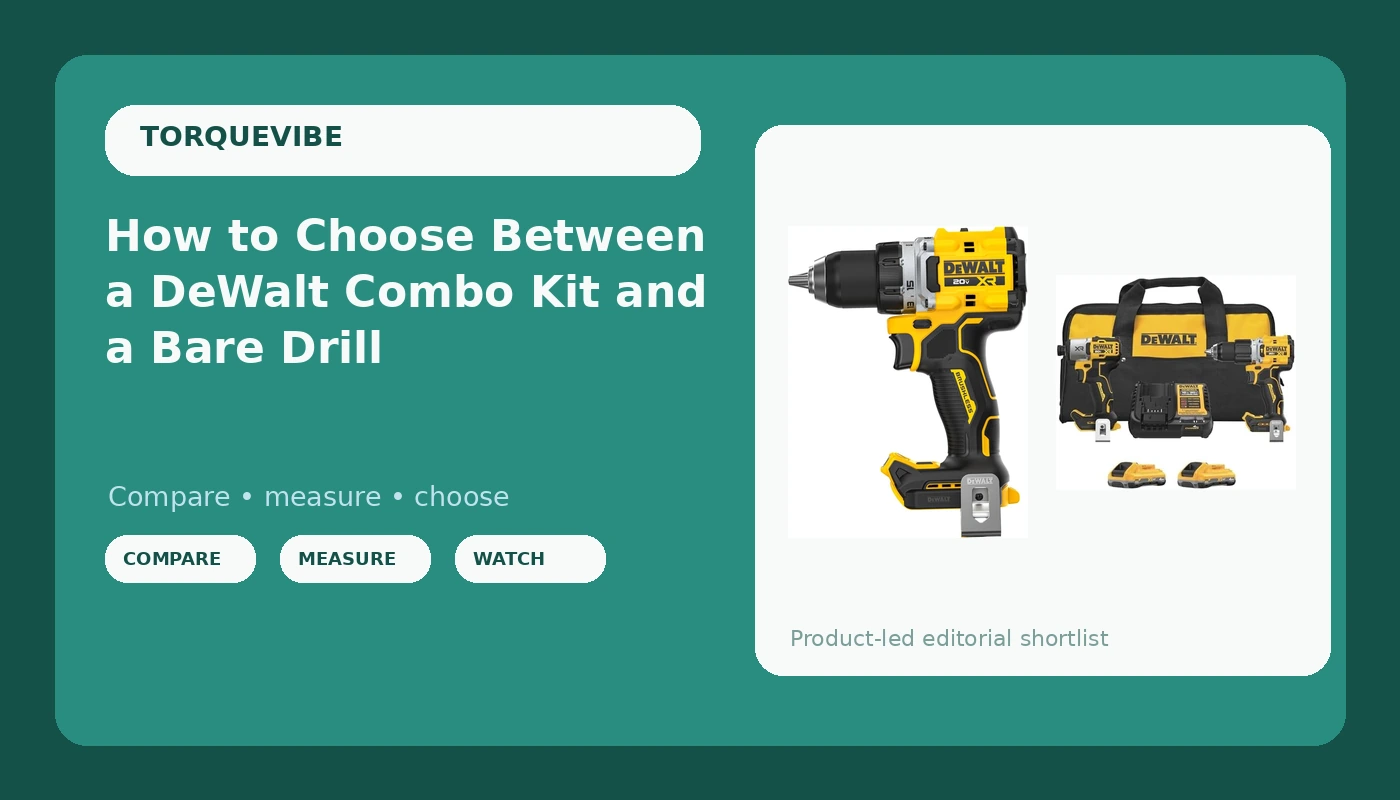
Two DeWalt boxes, one decision. On one side there is the DeWalt 20V drill combo kit: an impact driver, a hammer drill, two 4Ah POWERPACK batteries, and a charger. On the other side there is the bare 1/2-inch drill/driver, tool only, no battery in the box. Both run on the same 20V MAX platform. Both are brushless XR. Both will drive a screw.
So which one gets your money? That depends on three things: the batteries already sitting in your garage, the material you actually drill, and whether you need an impact driver in the same breath. Get those three answers straight and the choice takes about 90 seconds.
Why you should trust me
I ran a general contracting crew in Cleveland for 22 years. Decks, basements, kitchens, the whole rusty Midwest menu. I have burned out more drills than most people will ever own, and every one that died on a jobsite ended up on the graveyard wall in my shop. There are 30-some tools up there now, and I can tell you the story of each one: the screwgun with the melted brushes, the hammer drill that caught fire mid-pour, the impact driver that stripped its own anvil.
That wall is the most honest review system I know, because nothing gets on it without earning its death. I buy tools the same way you do, and I judge them at screw 200, not screw 5.
How I judge a cordless drill before it earns a spot on the truck
Spec torque is measured on a fresh battery with a warm motor. Real torque is what is left after 50 screws, a tired arm, and a 40-degree Cleveland morning. So I do not shop off the box numbers. I shop off five things.
The chuck. A chuck that slips is a tool that lies. I do not care how many inch-pounds the box claims if the jaws let go under load. This is the number one failure on cheap drills, and it shows up on day one, not year three.
The motor. Brushless is not a marketing word. It is the difference between a tool that lasts a season and a tool that lasts a decade, because there are no carbon brushes to wear down.
The battery platform. This is the real purchase. The drill is just the first tool you hang on it. Ten years from now you are still married to that platform, so buy into one that will still be selling batteries and parts in 2036.
The clutch. The adjustable collar that stops the chuck from spinning at a set torque. Without a working clutch you bury screws through drywall and strip heads all afternoon.
The weight. A compact tool beats a full-size one for about 90% of the work. The torque difference is mostly marketing. The weight difference is real, and you feel it at hour six.
Two ways to buy into the 20V platform
There is no wrong answer here, but there is a wrong answer for your situation. Here is how the two DeWalt options shake out.
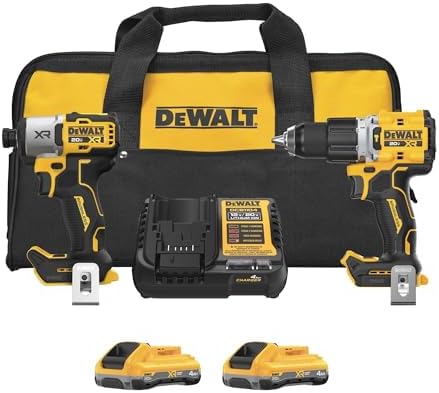
The all-in kit: DEWALT 20V MAX XR Impact Driver and Hammer Drill Cordless Power Tool Combo Kit, Includes 2 x 4ah POWERPACK Batteries and a Charger (DCK250QQ2)
 Visit on Amazon →
This is the box I would hand a new homeowner, a first-time apprentice, or anybody who just moved into a house with a punch list. You get two tools and two batteries and a charger, which means you can run one battery down and keep working on the other instead of standing around waiting.
The impact driver is the half that earns its keep. It has a 1/4-inch hex collet, so bits click in and out with one hand, no chuck to tighten. That is the correct way to build an impact driver. Any impact driver with a three-jaw chuck is a tool designed by somebody who has never hung a door.
The hammer drill half matters if you ever drill into brick, block, or old Cleveland foundation concrete. If you never touch masonry, you are paying for a function you will not use.
Flaws but not dealbreakers: A combo kit locks you into whatever batteries ship in the box. Two 4Ah packs are a good working size, but if you already own four DeWalt packs, you are buying batteries you do not need.
Anyone starting from zero, or anyone who wants one box that covers drilling and driving, should look here first.
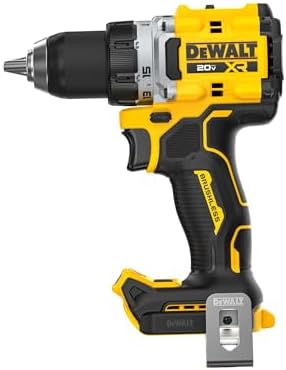
The bare-tool route: DEWALT 20V MAX XR Brushless Cordless 1/2 in. Drill/Driver (Tool Only) (DCD801B)
 Visit on Amazon →
Tool only means exactly that. No battery, no charger, nothing to plug into the wall. You are buying the drill and the drill alone, which is the right move for one specific person: the guy who already has DeWalt 20V batteries on the shelf and does not want to pay for more of them.
The 1/2-inch chuck takes the full range of bits, from a 1/16-inch twist bit up to a 1/2-inch shank, and it is the size that matters if you run spade bits or hole saws. The clutch does the work on cabinet screws and drywall. Brushless motor, XR line, so it is built for daily use rather than a weekend twice a year.
What you give up is the impact driver. If your work is deck screws and lag bolts, this drill alone will fight you, and you will end up buying a second tool anyway. If your work is holes, pilot holes, and driving screws into softwood, this is the whole toolbox.
Flaws but not dealbreakers: Tool-only pricing looks cheap until you price a battery and a charger. Do the math before you click, because buying this and a battery can land you near combo-kit territory with one tool instead of two.
Anyone already on the 20V platform who needs a second drill, or a lighter drill for finish work, will get the most out of this one.
The actual workflow: how to pick one and set it up right
Here is the process I walk people through, in order. Do not skip step one, because it changes everything downstream.
Step one: count your batteries. Go look. Not in your head, in the garage. If you own two or more DeWalt 20V packs and a charger, the bare tool is almost always the smarter buy. If you own zero, the combo kit is the cheaper way into the platform, because you are buying the batteries at kit pricing instead of one at a time.
Step two: decide if you need the hammer function. Hammer drills are for masonry: brick, block, cured concrete, tile backing. If you live in an apartment with drywall and wood studs, you do not need it. If you own a house with a brick exterior and you hang things on it, you do, and you will be miserable trying to drill brick with a standard drill and a masonry bit.
Step three: decide if you need an impact driver. The impact driver is the most abused tool on any jobsite, and it is the correct tool for 3-inch deck screws and lag bolts. It applies rotational blows instead of steady torque, which keeps the bit from cam-out and keeps your wrist from twisting. If you are building a deck, a fence, or a shed, get the impact driver. If you are assembling furniture, you do not need it.
Step four: do the tool-only math honestly. Add up what the bare tool plus a battery plus a charger costs against the kit. The kit includes two tools and two batteries. The bare tool includes one tool and no batteries. Once you add the missing pieces, the gap narrows fast, and the kit usually wins for a first purchase. Check current Amazon price on both before you decide.
Step five: check the chuck and the collet before the first bit goes in. Spin the chuck closed on a bit and try to wiggle it side to side. Any play is a problem. On the impact driver, push a hex bit into the collet and pull it. It should lock with a click and not move. A loose collet will eat bits and round off the hex shanks.
Step six: set the clutch before you drive the first screw. On the drill, start at a low clutch number and work up. You want the clutch to cam out just as the screw seats flush. Too high and you bury the head through drywall. Too low and the screw stops half an inch proud and you strip it trying to finish the job.
Step seven: match the bit to the fastener. A number two Phillips for drywall and cabinet screws. A star or Torx driver for deck screws, because they cam out less. A hex shank bit in the impact driver, always. Never put a round-shank bit in an impact driver, because it will spin in the collet and chew itself up.
Step eight: treat the batteries like the expensive part, because they are. Do not leave a pack on the charger for weeks. Do not store them in a freezing garage over the winter if you can help it. Do not run them dead and then leave them dead. A pack that gets charged, used, and charged again lasts years longer than one that sits on a shelf at 0%.
That is the whole process. Nine times out of ten the answer is the combo kit for a first-time buyer and the bare tool for anyone already on the platform.
The competition, and why it lost
Milwaukee M18 Fuel is the best overall for pros in my experience. It is the only line I have never had come back from a jobsite with smoke coming out of it. But it is a different battery platform, and if you already own DeWalt batteries, switching means starting over.
Makita is the smoothest. Best chuck feel and trigger control in the industry, and the platform has outlived two of my trucks. It also costs more for the same class of tool.
Ryobi is fine for homeowners and I will say it out loud. The brushed models die fast, but the brushless HP line is legitimate for the price, and the battery platform is enormous.
Bosch builds the most compact drills, which matters in tight spaces, but the battery lineup lags the big two and that is a long-term problem.
Craftsman is a trap. It looks like DeWalt's little brother and dies like one nobody warned you about.
None of those are what this article is about. This is about two DeWalt options on one platform, and about not buying the wrong one for your garage.
What this all costs
I am not going to quote you a number, because prices move and the only number that matters is the one on the page when you click. Check current Amazon price on both and do the comparison yourself.
What I will tell you is how to think about it. The combo kit costs more up front, and you get two tools, two batteries, and a charger. The bare tool costs less up front, and you get one tool and nothing to power it with. If you already own batteries, the bare tool is the better value by a wide margin, because you are not paying twice for the part you already have.
Divide either price by the years you will actually use the tool and the difference gets small fast. A drill that lasts ten years costs a fraction per year of what a drill that dies in two does. That is the math that matters, and it is the reason I keep telling people the battery platform is the purchase and the drill is the accessory.
One last thing. Whichever box you open, read the clutch collar before you drive a screw into something expensive. Setting the clutch takes ten seconds and it is the difference between a clean job and a stripped screw head you have to drill out on a Sunday afternoon.
That is the job. Pick your platform, count your batteries, and let the tool do the work.