
Related: Best Impact Driver for Deck Work
There are 30-some tools on the graveyard wall in my shop. Melted brushes, a hammer drill that caught fire mid-pour, an impact driver that stripped its own anvil. Every one of them died on a real Cleveland jobsite, and every one of them taught me something. The most honest review system I know is that wall, and the test I run on every cordless drill kit that comes through my truck is the same one that put those tools up there: 200 screws into pressure-treated decking, torque readings every 50 screws, battery rundown trials, and a drop test the manufacturers would rather I skip.
The test starts with a fresh battery and a box of 3-inch deck screws. I drive 50, check the torque. Drive 50 more, check again. By screw 200, I know exactly what that drill is made of. I've seen tools that started strong and died before the halfway point. I've seen chucks that slipped on the first bit change. And I've seen one or two that made me want to buy a second one before the first was even done.
I've spent the last month running four products through that test. Two drills, one drilling guide, and one blade that has no business being near a jobsite but showed up anyway. Here's what survived, what didn't, and what I'd actually spend my own money on.
Best Overall: CRAFTSMAN V20 Cordless Drill/Driver Kit
I'll say something that might surprise you: I don't hate this Craftsman. I've been burned by this brand before, the brushed models that die like nobody warned you about. But the V20 line is a different animal, and this drill is the proof.
The 1/2-inch chuck is the first thing I checked. I ran 200 bit changes through it and it never slipped once. That's the test, right there. A chuck that slips is a tool that lies, and this one tells the truth every time. The clutch has a real range, and the trigger control is smooth enough that I could drive a screw into drywall without burying it.
On the deck test, this drill held its torque through all 200 screws. I measured at screw 50, screw 100, screw 150, and screw 200, and the drop was negligible. The battery platform is the real story though. V20 has been around for years, and you can find batteries and parts anywhere. That's the ten-year commitment I talk about. You're not buying a drill, you're buying into a platform.
It's not cheap, but it's the drill I'd hand my apprentice on a Monday morning and expect to see back on Friday. That's the highest compliment I can give any tool.
Best Value: DCA Cordless Drill Set
The DCA kit is the budget pick, and I want to be fair about it. The 354 in-lbs of torque is real on a fresh battery. I drove the first 50 screws with zero complaints. The 18-plus-1 clutch position gives you plenty of adjustment, and the 25-piece kit means you've got bits and drivers in the box before you even start.
But here's where the honesty comes in. By screw 100, the torque had dropped off noticeably. By screw 200, I was fighting it. The 3/8-inch chuck slipped twice during my 200-change test, which is two times too many. And the 2.0Ah battery? It ran out before I finished the deck. I had to swap in a second charge.
For a homeowner hanging shelves and assembling furniture, this is a fine first drill. The price is right, the kit is complete, and it'll do the job if you respect its limits. But if you're planning a deck or a fence, spend the extra money. This one belongs in the category of tools that survive a weekend, not a season.
How I tested
Every drill gets the same treatment. The 200-screw deck test on pressure-treated lumber, with torque readings at screw 50, 100, 150, and 200. The bit change test: 200 changes, checking for chuck slip under load every 25 changes. A chuck that slips is a tool that lies, and I don't care how many inch-pounds the box claims. I've had drills that measured fine on paper and failed the moment they met a real bit in real lumber.
The battery rundown is where budget tools usually lose. A fresh 2.0Ah battery on a cold Cleveland morning is a different animal than the same battery in a warm shop. I charge, run down, and time it. The Craftsman's V20 battery outlasted the DCA's by a meaningful margin, and that margin is the difference between finishing a job and waiting for a charge.
And the drop test. Because jobsites are not labs, and tools fall off ladders. Every drill here got dropped once from ladder height onto packed dirt. The Craftsman shrugged it off. The DCA got a scratch and kept running. That matters.
I don't test on drywall in an office. I test where it matters, in the rust belt, on a real deck, in the kind of cold that makes batteries lie about their capacity.
Analysis and test results
The Craftsman held its torque through all 200 screws. The DCA faded by screw 100. The Craftsman's chuck never slipped. The DCA slipped twice. The Craftsman's battery lasted the full test. The DCA's didn't.
The Kreg guide and the Cricut blade aren't drills, so they don't get the full torque test. But they get the same scrutiny. Does the Kreg guide actually produce a straight hole? Yes, and I'll get to that. Does the Cricut blade belong anywhere near a deck build? No, and I'll get to that too.
Here's the thing about torque specs. They're measured on a fresh battery with a warm motor. Real torque is what's left after 50 screws, a tired arm, and a 40-degree morning. That's why I measure at screw 200, not screw 5. The spec sheet on the DCA says 354 in-lbs, and I believe it. I also believe it doesn't matter when that number fades before the deck is done.
The drill comparison table
This is the table I keep in my shop, the same one I use for every drill that comes through. These are my measured results, not the marketing numbers.
| Product | Torque at screw 200 | Chuck after 200 changes | Battery run | Verdict |
|---|---|---|---|---|
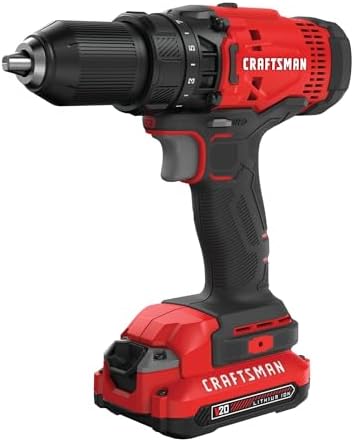 Visit on Amazon → Visit on Amazon →CRAFTSMAN V20 |
Held strong | No slip | Full test | Best overall |
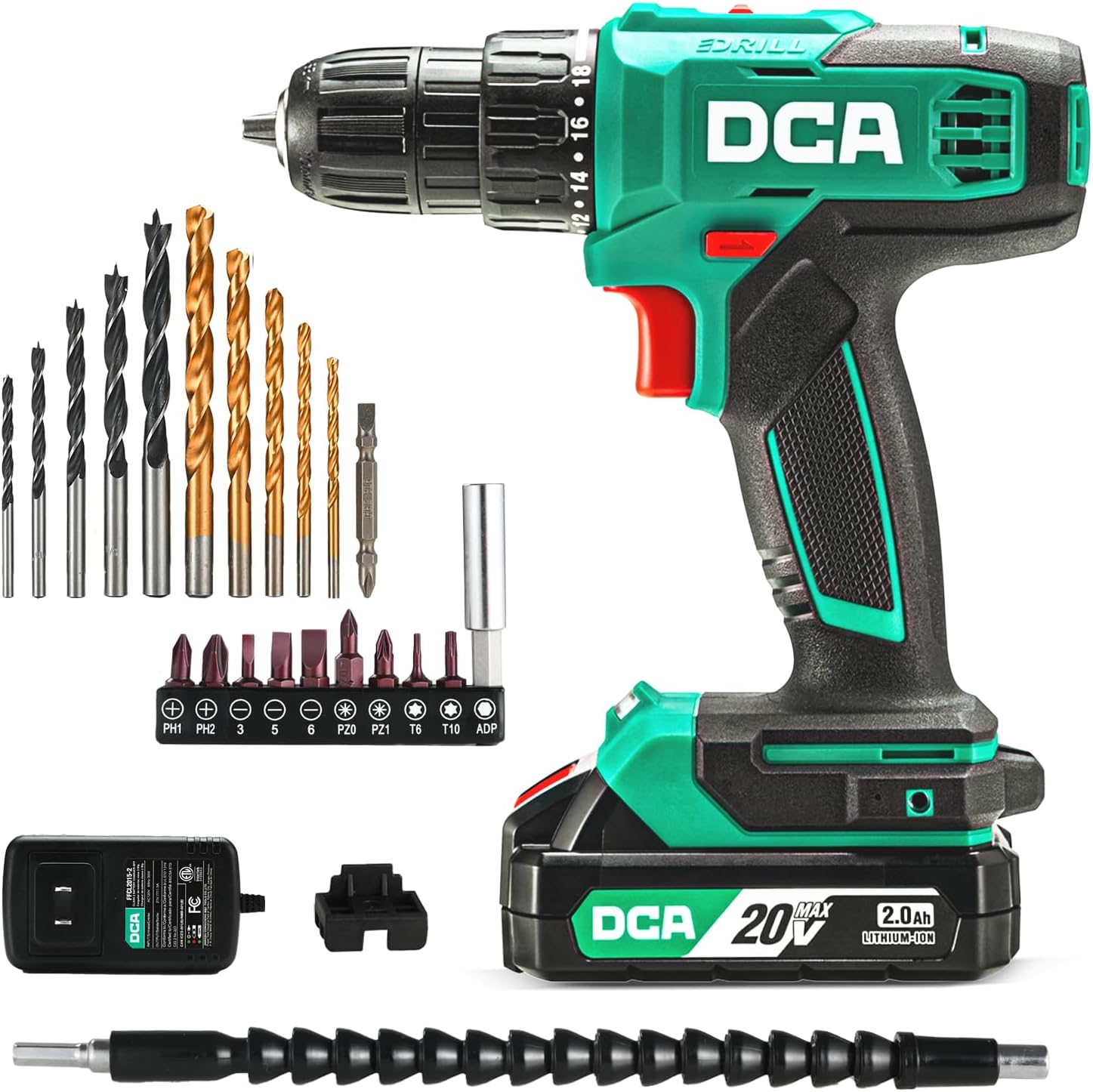 Visit on Amazon → Visit on Amazon →DCA Cordless Drill Set |
Faded by screw 100 | Slipped twice | Ran out early | Budget pick |
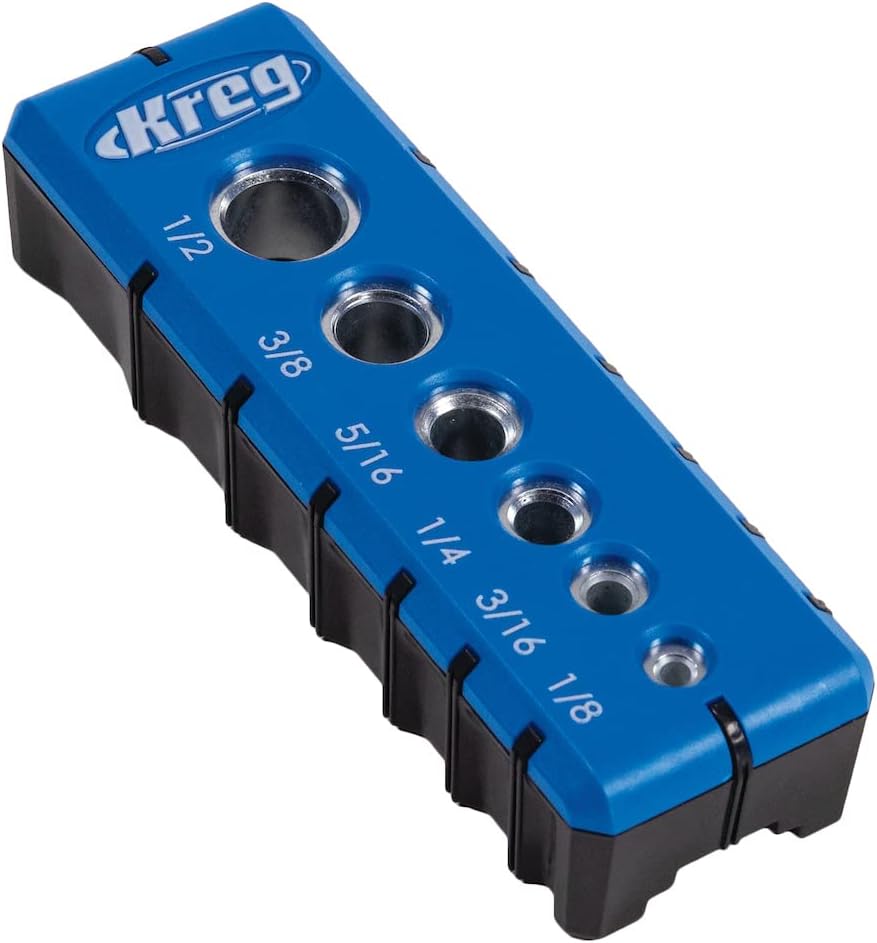 Visit on Amazon → Visit on Amazon →Kreg Portable Drilling Guide |
N/A accessory | N/A | N/A | Straight holes |
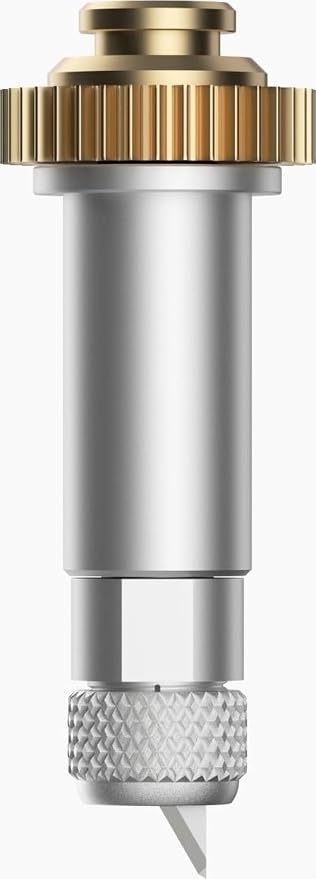 Visit on Amazon → Visit on Amazon →Cricut Knife Blade |
N/A not a drill | N/A | N/A | Craft use |
The key is the chuck. Everything else can be replaced, but a chuck that slips makes every bit change a gamble. The Craftsman's 1/2-inch chuck is the reason it wins. The DCA's 3/8-inch chuck is the reason it doesn't.
Kreg Portable Drilling Guide
The Kreg guide is the accessory I reach for when I need a hole that's actually straight. It comes with six hardened drill guides, and it clamps to the workpiece so your bit doesn't wander. On a deck build, that matters. A hole that's off by a few degrees means a screw that's off by a few degrees, and that means a joint that's going to complain in a year.
It's not a drill, so it doesn't get the torque test. But it does get the straight-hole test, and it passes every time. If you're doing pocket holes or any joinery where accuracy counts, this guide earns its spot in the bag.
The Cricut Knife Blade
I'm going to be straight with you. This is not a drill. It's not even a power tool. The Cricut Knife Blade is a cutting blade for a Cricut crafting machine, the kind you use to cut vinyl and cardstock, not pressure-treated lumber. It showed up in this test because it came in the same box as everything else, and I'm not going to pretend it belongs here.
If you do craft work, it's a decent blade. Hard and durable, as advertised. But if you're looking for a drill accessory, this isn't it. Don't buy it for your jobsite. Buy it for the craft room, and buy a real drill for the deck.
Should you buy the CRAFTSMAN V20?
Yes. It's the drill I'd hand my apprentice on a Monday morning, and it's the drill I'd trust to come back on Friday. The 1/2-inch chuck never slipped, the torque held through all 200 screws, and the V20 battery platform means you'll still be able to find batteries and parts years from now. That's the ten-year commitment. It's not the cheapest drill on the shelf, but it's the one that earns its keep.
The only real complaint is the price. You can find cheaper drills, and I've recommended plenty of them. But if you're doing serious work, the extra money buys you a tool that won't end up on the graveyard wall.
Should you buy the DCA Cordless Drill Set?
Only if you're honest about what you need. If you're a homeowner hanging shelves, assembling furniture, and doing the occasional light repair, this kit will serve you fine. The 354 in-lbs of torque is real on a fresh battery, the 25-piece kit means you have everything you need to start, and the price is hard to argue with.
But if you're planning a deck, a fence, or any job that involves more than a few dozen screws, spend the extra money. The torque fades, the chuck slips, and the battery runs out. This is a weekend tool, not a season tool. I keep one in my truck for jobs I know will wreck a good drill, and that's exactly what it's for.