Related: Best Cordless Drill for Deck Building: What Survives Screw 200
I keep a graveyard wall in my shop. Thirty-some dead tools are nailed up there, and I can tell you the story of every one of them: a screwgun with melted brushes, a hammer drill that caught fire mid-pour, an impact driver that stripped its own anvil. Nothing gets on that wall without earning its death, and nothing gets recommended here without surviving a real jobsite first.
That is the only honest way I know to look at cordless drills and drilling guides. Not at the box, not at the spec sheet, and not at whatever number the marketing department printed on the side of the case. What I care about is what a tool does at screw 50 instead of screw 5, whether the chuck still bites after a few hundred bit changes, and whether I can still buy a battery for it five years from now.
Most buyers get one thing wrong, and it costs them the most money: you are not buying a drill. You are buying a battery platform, and the drill is just the first tool you hang on it. Ten years from now you are still married to that decision.
The other half of the equation is the drilling guide, and it is the most underrated accessory in the trade. I have watched good carpenters fight a spade bit through a 2x10 freehand because they were too proud to clamp a block down. Straight holes are not a talent. They are a tool, and a cheap one.
Here is the short list, plus the two guides I would not start a job without.
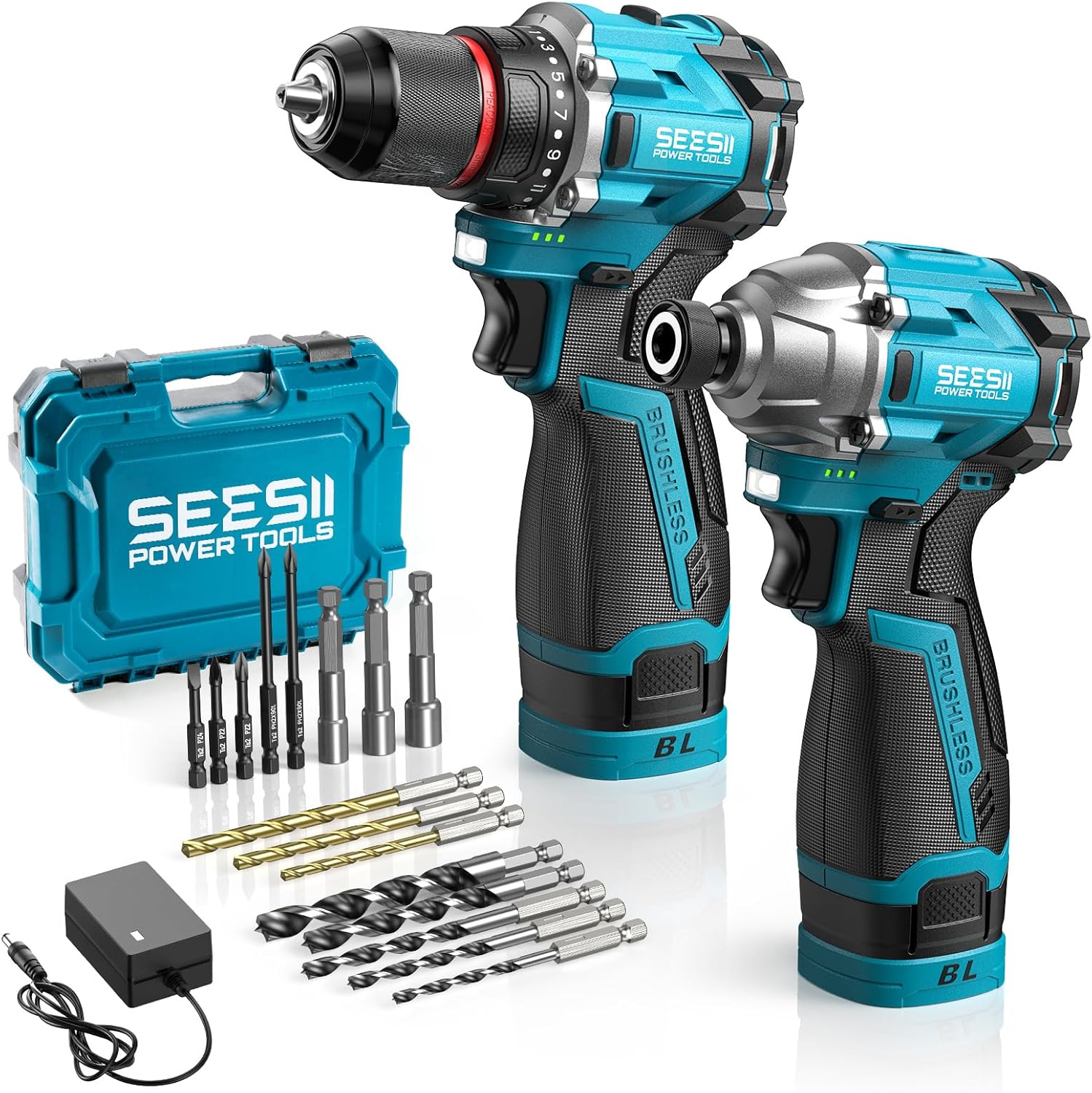
Best Overall: Brushless Drill and Impact Driver Combo Kit
If you are stepping up from a hand-me-down drill, this is the category I would put my money in: a brushless combo kit with a drill for the holes and an impact driver for the fasteners. That is the difference between owning one tool and owning a system.
A drill is for making holes. An impact driver is for driving screws, and those are not the same job. A 3-inch deck screw wants an impact driver, not a drill. Every time somebody tells me their drill burned up on a deck, I ask what they were driving, and the answer is always the same.
Brushless is not a marketing word. It is a motor with no carbon brushes to wear out, which means more runtime, more usable power, and the difference between a tool that lasts a season and a tool that lasts a decade. If you are buying once, buy brushless.
The thing to check before you commit is the platform behind the kit. Look at what else hangs on it: saws, lights, a blower, whatever else you will want in five years. The drill is the cheap part of that decision.
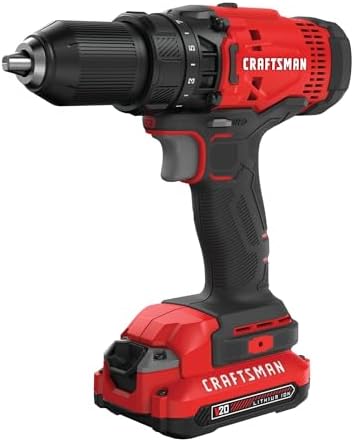
Best Name-Brand Kit: CRAFTSMAN V20 Cordless Drill/Driver Kit
I am going to be straight with you, because that is what this site is for: Craftsman and I have history. The V20 kit is the one that looks like a bargain in the aisle, and it is also the one I keep in my own truck for jobs I already know will wreck a good tool. That is not a compliment to the tool. It is a statement about how I use it.
Where it makes sense is the homeowner with a short list. Hanging shelves, assembling furniture, running a handful of deck screws on a Saturday afternoon. The 1/2-inch chuck takes a full-size bit, and a battery and charger come in the box, so you are not nickel-and-diming yourself into a working tool.
Where I would think harder is if this is the first step onto a platform you plan to build on for a decade. Buy once, cry once is the rule I break in my own truck, and I would rather tell you that out loud than pretend I am consistent about it.
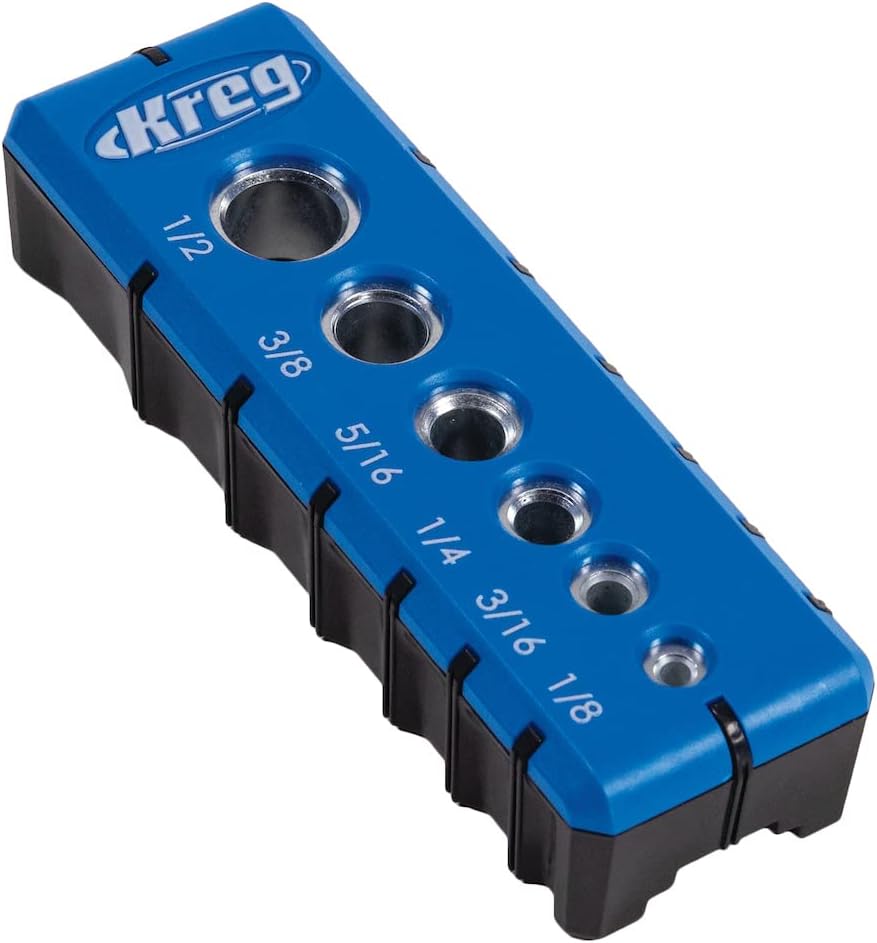
Best for Pocket Holes and Angled Work: Kreg Portable Drilling Guide
Six hardened drill guides in a portable block, and this one earns its place in my bag for a single reason: it makes an angled hole repeatable. Pocket-hole joinery, cabinet face frames, anything where the bit has to enter at an angle and leave straight, this is the tool that stops you from guessing.
The hardened part matters. A soft guide bushing gets wallowed out after a few hundred holes and then it stops guiding anything. Hardened steel holds the angle, and the block clamps down so you are not fighting the drill and the workpiece at the same time.
It is not a drill press, and it is not pretending to be. It is what you carry when the workpiece is too big to bring to the drill press.
Best for Straight Holes: Milescraft 1307 Drill Block PRO
25 drill guides in one all-metal block, sized from 1/8 inch to 1/2 inch in 1/64 inch increments. That range covers almost everything a homeowner or a finish carpenter actually drills, and the all-metal body does not flex under load the way a plastic block does.
The dual V-groove is the part I like best. It lets the block sit on round stock like dowels and pipe, and it gives you a stable seat on corners where a flat block would rock. Rocking is how you get an oval hole, and an oval hole is how you get a loose dowel, a wobbly shelf, and a return trip to the lumber yard.
I keep this one in the truck for the jobs where a drill press is a fantasy and the hole still has to be straight.
The reference table
This is the same table I keep taped inside my shop cabinet. It is the short version of what each tool is for, so you stop grabbing the wrong one.
| Tool | Best for | Type | Price |
|---|---|---|---|
 Visit on Amazon → Visit on Amazon →Brushless drill and impact driver combo kit |
Holes and fasteners in one purchase | Brushless drill plus impact driver | $89.99 |
 Visit on Amazon → Visit on Amazon →CRAFTSMAN V20 cordless drill/driver kit |
Light duty and short lists | Drill only, battery and charger included | $99.00 |
 Visit on Amazon → Visit on Amazon →Kreg portable drilling guide |
Pocket holes and angled work | Portable guide with 6 hardened bushings | $8.98 |
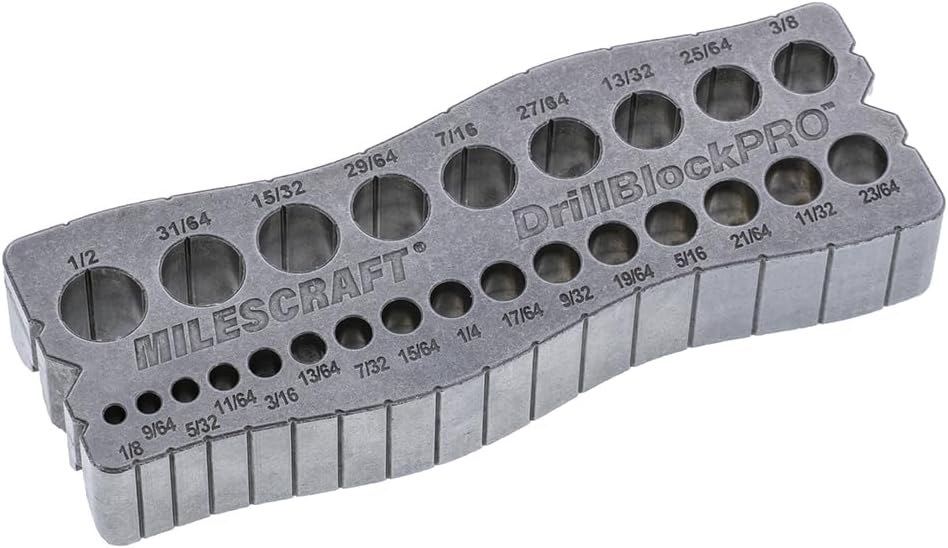 Visit on Amazon → Visit on Amazon →Milescraft 1307 Drill Block PRO |
Straight holes in flat stock, round stock, and corners | All-metal block, 25 guides, dual V-groove | $24.99 |
How I test
I do not test drills on drywall in an office. I test them the way a contractor uses them, because that is the only test that has ever told me the truth.
The drill test starts with holes: 1/2-inch spade bits through wet lumber, which is the fastest way I know to find out whether a chuck actually bites or just looks like it does. Then screws, a couple hundred of them, on one battery, with torque readings taken every 50 so I can see what is left after the motor is warm and my arm is tired. A drill that feels strong at screw 5 and weak at screw 200 is not a strong drill. It is a fresh battery.
The battery rundown is its own trial: charger to dead, timed, on the same job, so the runtime claim on the box has to survive contact with a 40-degree Cleveland morning.
The drop test is not optional. If a tool cannot survive coming off a ladder once, it does not belong on my truck. Jobsites are not labs, and no manufacturer has ever asked me to skip that part.
The guides get the opposite treatment: hundreds of holes, checking whether the bushing still holds the bit perpendicular at the end of the run, and whether the block still sits flat on round stock without rocking. A guide that wallows out is a guide that lied.
Analysis and test results
The pattern in this category is consistent, and it has nothing to do with the number on the box.
Brushless wins on runtime and on lifespan, and it is not close. The carbon brushes in a brushed motor are a wear item, plain and simple, and a wear item means a service life. If you are drilling a handful of holes a month, that service life will outlast your interest in the project. If you are driving screws for a living, it will not.
The chuck is the second thing to watch. A slipping chuck is a lying tool, and it shows up as stripped screw heads and rounded bit shanks long before the motor ever complains. The 1/2-inch capacity on the CRAFTSMAN kit is a real advantage for a homeowner, because it takes the full-size bits that a smaller chuck will not.
On the guide side, hardened bushings are the whole ballgame. Soft ones wallow out and stop guiding, which turns a precision tool into a decoration. The Kreg block holds an angle repeatably, and the Milescraft block covers a wider size range with a V-groove that sits on round stock and corners. Between them you can handle almost any hole that does not need a drill press.
And the one thing that never shows up on a spec sheet: whether a tool survives being dropped off a ladder. That is where the graveyard wall gets fed.
Should you buy the brushless combo kit?
Yes, if you are building a kit rather than buying one tool. A drill makes the holes and an impact driver drives the fasteners, and buying both on one battery platform is cheaper and smarter than buying them one at a time. Brushless means no brushes to replace, which is the difference between a seasonal tool and a decade tool.
Buy it for the platform as much as for the drill. Look at what else hangs on that battery, because that is the decision you are actually making.
Should you buy the CRAFTSMAN V20 kit?
It is a fair kit for a short list. Shelves, furniture, a handful of Saturday screws, and a 1/2-inch chuck that takes a full-size bit. A battery and charger in the box means you can work the day it arrives.
I would not build a ten-year platform on it, and I will say that plainly. If you want one drill for light duty and you want to spend as little as possible getting there, this does the job. If you are planning to add tools for years, start somewhere else.
Should you buy the drilling guides?
Yes, and this is the cheapest accuracy you will ever buy. The Kreg portable guide makes angled holes repeatable, which is what pocket-hole work and face frames demand. The Milescraft Drill Block PRO covers straight holes from 1/8 inch to 1/2 inch in 1/64 inch increments, with a V-groove that holds round stock and corners steady.
Neither one replaces a drill press. Both of them replace the guesswork, and guesswork is what turns a straight hole into an oval one and a Saturday project into a second trip to the lumber yard.